
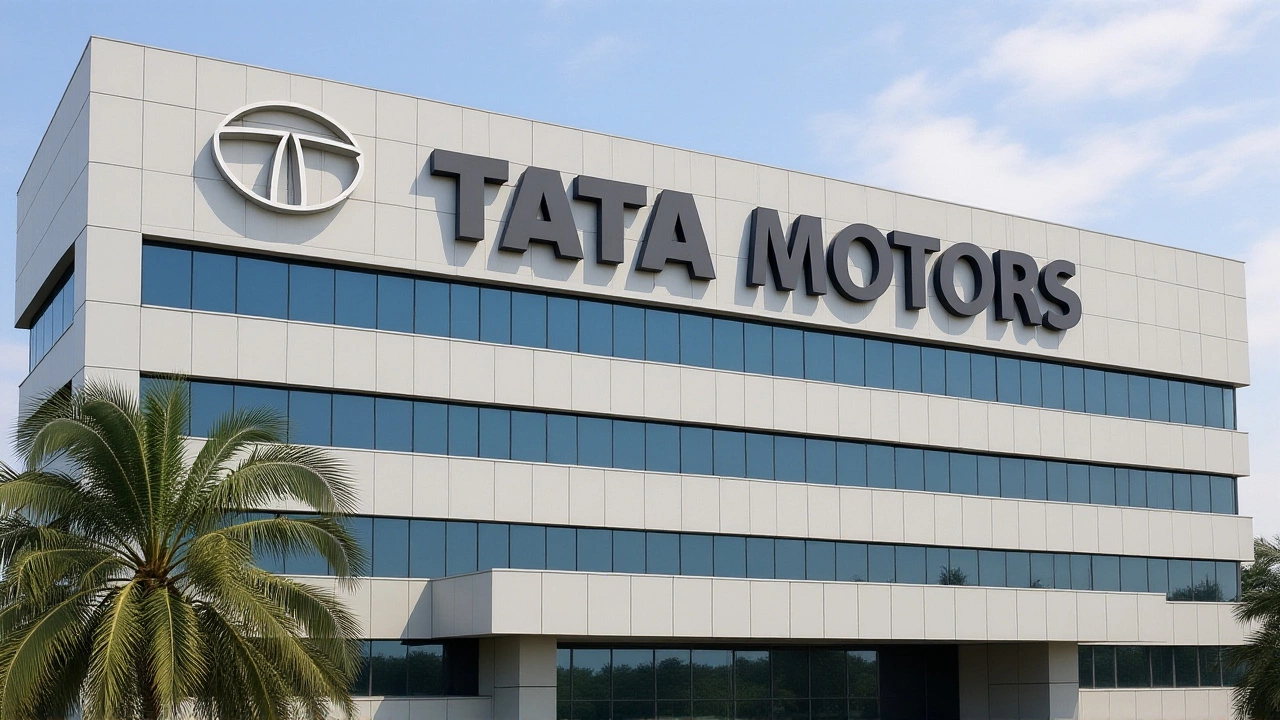
When Tata Motors Limited kicked off its long‑awaited Tata Motors demerger on , the Indian auto sector felt a palpable shift. The move splits the conglomerate into two publicly listed entities – one dedicated to commercial vehicles and the other to passenger cars, EVs and the luxury arm Jaguar Land Rover. The board, the regulator and the National Company Law Tribunal (NCLT) all gave their nod, making the split a legal certainty.
Background and Why the Split Matters
Chairman N Chandrasekaran announced the plan at Tata Motors’ 80th Annual General Meeting on Friday, stressing that the two businesses have grown "like twins with different temperaments" and need separate breathing space. The commercial‑vehicle (CV) arm has been a cash‑generator, while the passenger‑vehicle (PV) side wrestles with electrification and overseas branding challenges. By disentangling the units, the group hopes to give each a sharper strategic focus – a classic play in corporate restructuring.
How the Demerger Works: Share Allocation and Timeline
The demerger record date is slated for mid‑October 2025, pending final approval from the Registrar of Companies. Shareholders on that date will receive a 1:1 allocation: one share of the new CV company – tentatively called TMLCV – for every Tata Motors share they hold, while their existing shares morph into the passenger‑vehicle entity (TMPVL). In practical terms, a holder of 100 Tata Motors shares will end up with 100 shares in each of the two new firms, preserving their overall ownership percentage.
Chandrasekaran hinted at a staggered listing – the passenger‑vehicle firm will hit the exchange first, followed a few months later by the commercial‑vehicle entity, likely in the October‑November‑December quarter of 2025.
Market Reaction: Share Price Moves and Analyst Views
Investors responded with a mix of optimism and caution. On September 30, shares opened at Rs 672.50 on the BSE, peaked at Rs 683.50, slipped to a low of Rs 666.95, and closed at Rs 680.45 – a modest 1.18 % gain. The stock had earlier touched a 52‑week high of Rs 995.75, underscoring the volatility that surrounds structural changes.
One voice of confidence came from Gaurang Shah of Geojit Investments. He said, "This will not have an immediate impact on earnings for the next two quarters, but it clears the debt‑addition concern and sets the stage for value unlocking as each unit pursues its own growth story." Shah’s optimism is tempered by the lingering tariff challenges that Jaguar Land Rover faces in key export markets.
Leadership Changes and Strategic Focus
The commercial‑vehicle business will be steered by Girish Wagh, a veteran who has overseen truck and bus portfolios for years. His mandate is clear: double down on heavy‑duty innovation, especially in fuel‑efficient diesel and emerging hydrogen propulsion.
Meanwhile, the passenger‑vehicle arm lands in the hands of Shailesh Chandra. He inherits the challenge of marrying legacy models with an aggressive electrification roadmap that includes a $2 billion spend by 2027. The plan also slots Jaguar Land Rover’s first fully electric Range Rover, already backed by more than 16,000 waiting‑list sign‑ups since December.
Implications for the EV Roadmap and JLR
Separating the EV thrust from the cash‑rich CV business gives the PV unit a cleaner balance sheet to fund battery‑fab partnerships and new model launches. Analysts expect the EV spend to accelerate, especially as the Indian government tightens emission norms. Jaguar Land Rover, while still a minority piece of the PV puzzle, will benefit from a dedicated capital allocation without the drag of the commercial‑vehicle cash flow requirements.
In the broader industry, the split signals a shift toward specialization – a trend already visible in Europe’s automotive landscape where firms are carving out pure‑play EV subsidiaries. For Tata Motors, the demerger could serve as a catalyst for both businesses to attract sector‑specific investors, improve ESG scores, and ultimately boost market valuations.
- Record date: Mid‑October 2025 (pending RoC approval)
- Share split: 1:1 for CV and PV entities
- Leadership: Girish Wagh (CV), Shailesh Chandra (PV)
- EV investment: $2 billion by 2027
- JLR electric launch: First electric Range Rover pending
Frequently Asked Questions
How will the share allocation affect existing Tata Motors shareholders?
Shareholders recorded on the mid‑October date will receive one new commercial‑vehicle share for every Tata Motors share they own, while their original shares become shares of the passenger‑vehicle entity. The net effect is a 1:1 split that keeps the overall ownership percentage unchanged across the two new companies.
When are the two new companies expected to list on the stock exchange?
The passenger‑vehicle arm (TMPVL) is slated to list first, likely by early November 2025. The commercial‑vehicle entity (TMLCV) should follow a few months later, with both listings anticipated within the October‑December quarter.
What does the demerger mean for Tata Motors’ electric‑vehicle strategy?
Separating the passenger‑vehicle business gives it a cleaner balance sheet to fund the $2 billion EV programme through 2027. It should accelerate model roll‑outs, allow dedicated partnerships with battery makers, and let the EV unit chase global standards without the cash‑flow constraints of the heavy‑duty segment.
Will employees or customers be impacted by the split?
Tata Motors has assured that the demerger will not affect day‑to‑day operations for employees, customers or partners. All existing contracts will be transferred to the relevant new entity, and shareholdings stay proportionate.
How does the market view the demerger compared to other global auto restructurings?
Analysts see Tata Motors joining a wave of specialists – similar to Volkswagen’s spin‑off of its commercial‑vehicle arm and GM’s earlier separation of its cruise‑tech unit. The consensus is that focused entities can attract niche investors and improve valuation multiples, though short‑term earnings may stay flat as integration costs settle.



Write a comment