
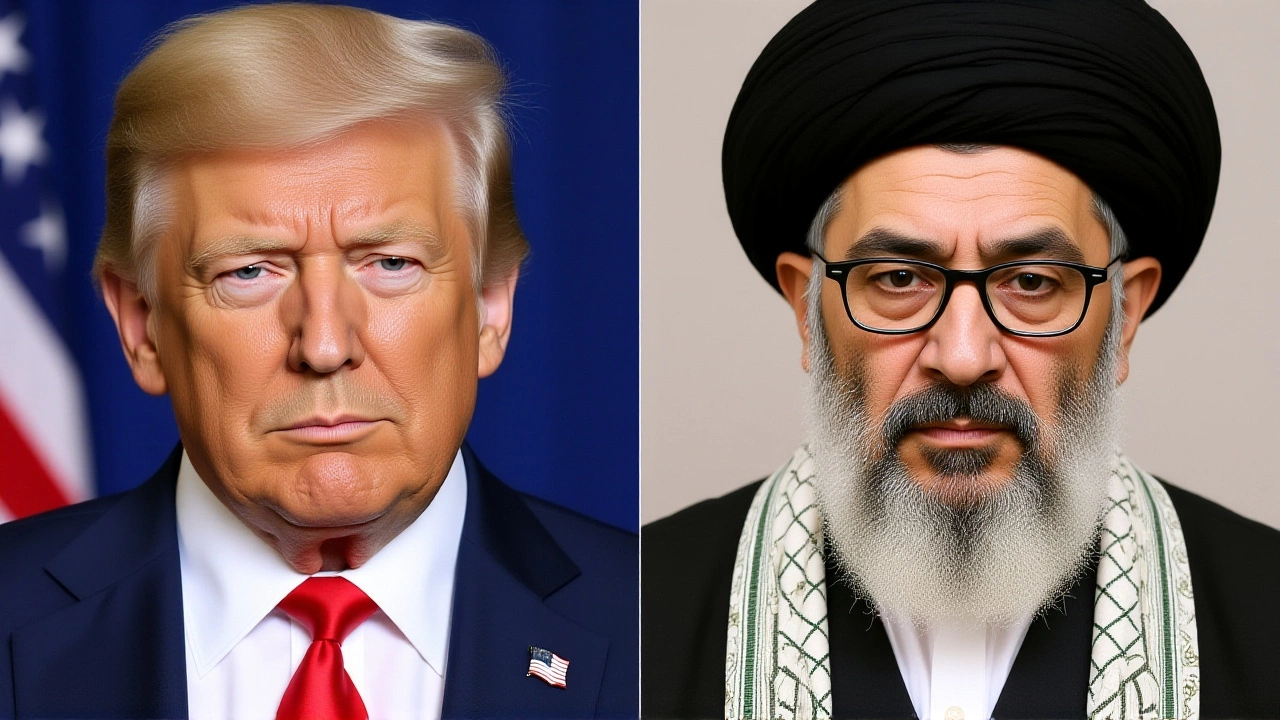
When Hossein Amir Abdullahi, Iran's foreign minister issued a stark warning on 8 April 2025, the message sent shockwaves across the Gulf. Donald Trump, U.S. president had just hinted at a possible strike on Iranian soil, and Tehran responded by telling six of its Muslim‑majority neighbours to stay out of any U.S. conflict. The warning, delivered in a televised press conference in Tehran, told Iraq, Kuwait, the United Arab Emirates, Qatar, Turkey and Bahrain that any assistance to Washington would be treated as an act of war.
Background: mounting tensions in the Persian Gulf
For months, the United States has been ramping up its military presence around the Strait of Hormuz – a choke point that ships carrying a third of the world’s oil use daily. In January, the Pentagon announced a new carrier group would be stationed off the coast of Oman, a move Tehran called "provocative". By March, Trump’s administration publicly threatened "swift and decisive" action if Iran continued to support the Houthi rebels in Yemen or pursued its nuclear agenda.
The latest Iranian warning is therefore not an isolated statement but part of a broader strategy to deter what Tehran sees as encirclement. Earlier in 2025, Iran’s national security council even drafted contingency plans for “defensive operations against any foreign power establishing a foothold on Iranian or allied territory.”
The warning explained
During the press briefing, Kamal Khanjazi, spokesperson for Iran’s National Security Council read a formal note that had been dispatched to the foreign ministries of the six target states. The note said, "If any of you permit the United States to use your airspace, ports or territory for military operations against Iran, we will consider it equivalent to a declaration of war and will act accordingly."
Abdullahi added, "We are not seeking conflict, but we will defend our sovereignty. Countries that help the United States will face the full force of Iranian resistance." The tone was unequivocal, and the wording mirrored legal language found in Iran’s constitution regarding national defense.
Reactions from the six neighbours
Fuad Huwaishi, Iraq’s foreign minister told reporters in Baghdad that Iraq would "continue diplomatic engagement" with Tehran but would not "be dragged into a U.S.-Iran confrontation."
Ahmad Nasser Al‑Sabah, Kuwait’s foreign minister said Kuwait was monitoring the situation closely and stressed its commitment to "regional stability" while preserving its own security interests.
Lubna Rashid Al‑Mallouh, spokesperson for the United Arab Emirates Ministry of Foreign Affairs replied that the UAE would make "decisions based on national interest and international law".
In Doha, Mohammed bin Abdulrahman Al‑Thani, Qatar’s foreign minister emphasized that Qatar "remains a neutral facilitator for dialogue" and would not become a "battleground".
Turkey’s president, Recep Tayyip Erdogan, president of the Republic of Turkey, warned that any escalation could destabilise the entire region, adding that Ankara would "act to protect its own borders and citizens".
Finally, Abdullatif bin Rashid Al‑Zayani, Bahrain’s foreign minister said his country stands with “its Gulf partners” and will "coordinate closely" in whatever diplomatic steps are required.
Expert analysis: what the warning means for U.S. policy
Middle‑East scholar Elihu Vinograd, professor at Tel Aviv University, noted, "Iran is trying to create a buffer zone – not just physical but diplomatic – that denies the United States any regional basing rights. The warning is a deterrent aimed at the logistical chain, not merely a rhetorical flourish."
At the Brookings Institution, senior analyst Dr. Kenneth Polard argued, "If Washington proceeds without securing regional consent, it risks opening multiple fronts. The Gulf states are already walking a tightrope between U.S. security guarantees and Iranian retaliation."
Tehran University’s international relations faculty member Mohammad Marandi added, "This is consistent with Iran’s long‑standing doctrine of ‘strategic depth’. By warning neighbours, Tehran seeks to turn potential allies of Washington into a diplomatic hurdle."
Potential fallout: scenarios for the next weeks
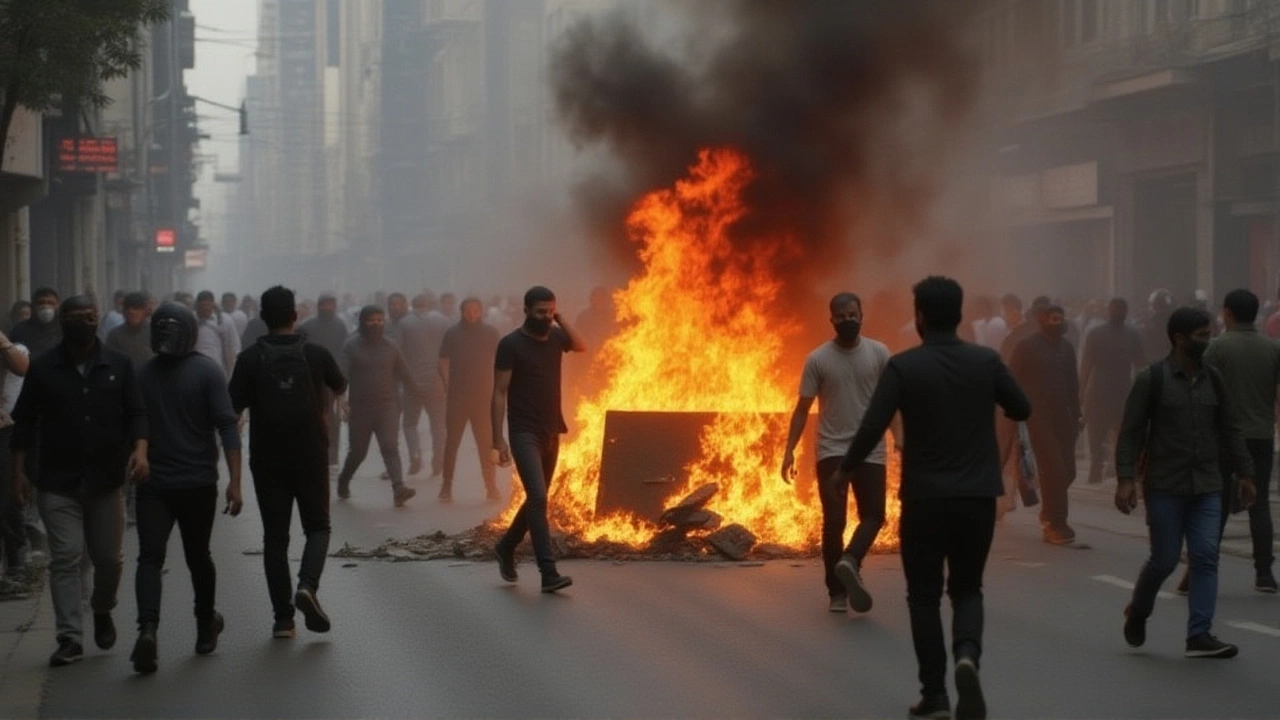
- Escalation: If the United States launches a limited strike, Iran could retaliate against one or more of the six warned states, sparking a wider regional conflict.
- Containment: Diplomatic channels remain open, and a joint OIC emergency meeting leads to a cease‑fire pledge, keeping the situation contained.
- Stalemate: Both sides engage in a war‑of‑words, with increased naval patrols but no direct engagement, prolonging uncertainty for oil markets.
The Organization of Islamic Cooperation (OIC) convened an emergency summit in Doha on 10 April, where Saudi Arabia, Iran, Egypt and Jordan discussed the risk of a broader war. While the communique condemned any unilateral use of force, it stopped short of issuing binding sanctions.
What comes next?
Washington is expected to release a formal response within 48 hours, likely framing the issue as a matter of “self‑defence against nuclear proliferation.” In the meantime, airlines have begun adjusting flight paths over the Persian Gulf, and shipping firms are rerouting vessels to avoid the Strait of Hormuz, temporarily inflating freight rates.
For the six warned neighbours, the immediate challenge is balancing their security guarantees from the United States with the risk of Iranian retaliation. Analysts predict a surge in back‑channel diplomacy, possibly mediated by neutral powers such as Switzerland or the United Nations.
Ultimately, the warning underscores how a single diplomatic statement can reverberate through an already volatile region, shaping the calculus of leaders on both sides of the conflict.
Frequently Asked Questions
How could Iran's warning affect oil prices?
If the warning leads to actual hostilities, traders will likely price in a risk premium for oil shipped through the Strait of Hormuz, which handles about 20% of global supply. Even a temporary suspension of traffic can push Brent crude up by $3‑$5 per barrel within days.
What legal basis does Iran claim for its threat?
Iran cites its constitution, which obliges the state to defend its sovereignty against foreign aggression. The warning invokes Article 150, which permits a pre‑emptive response if another nation uses Iranian or allied territory for attacks.
Which countries are most likely to side with the United States?
Historically, Saudi Arabia and the United Arab Emirates have close security ties with Washington. However, both have expressed caution this time, preferring a diplomatic solution to avoid direct confrontation with Iran.
What role is the OIC playing in de‑escalation?
The OIC has issued a joint statement urging restraint and offered to host a mediation session in Doha. While the organization lacks enforcement power, its collective diplomatic weight can pressure both Tehran and Washington to keep channels open.
What are the chances of a broader regional war?
Experts say the probability is moderate. A limited U.S. strike could trigger Iranian missile launches at U.S. bases in the Gulf, dragging in allies. However, the high economic cost of an oil‑price shock makes all parties wary of full‑scale war.




Write a comment