
The Central Teacher Eligibility Test (CTET) December 2025 will be held on February 8, 2026, the Central Board of Secondary Education (CBSE) has confirmed. For thousands of aspiring teachers across India, this isn’t just another exam date—it’s the gateway to a career in Kendriya Vidyalaya Sangathan (KVS), Navodaya Vidyalaya Samiti (NVS), and other central government schools. The notification, expected to drop on November 27, 2025 at ctet.nic.in, will open the floodgates for applications that must be submitted by December 18, 2025, at 11:59 p.m. No extensions. No exceptions.
Why This Exam Matters More Than Ever
The CTET isn’t just a formality. It’s the legal requirement for teaching in any central government school under the National Council for Teacher Education (NCTE) guidelines. Since its inception, the test has been the filter between passion and profession for over 1.2 million applicants annually. This year’s 21st edition comes at a critical juncture: India’s teacher shortage in rural and semi-urban zones is nearing 300,000, according to the Ministry of Education’s 2024 report. Passing the CTET doesn’t guarantee a job—but failing it shuts the door entirely.What’s new this cycle? The exam will be conducted in 20 languages across 132 cities, from Srinagar to Thiruvananthapuram. Candidates can choose their preferred language for the question paper, a move widely welcomed by non-English speakers in states like Bihar, Jharkhand, and Odisha. And unlike some competitive exams, there’s no negative marking. That’s intentional—CBSE wants to reduce test anxiety and focus on actual teaching aptitude.
How the Exam Works: Paper I and Paper II
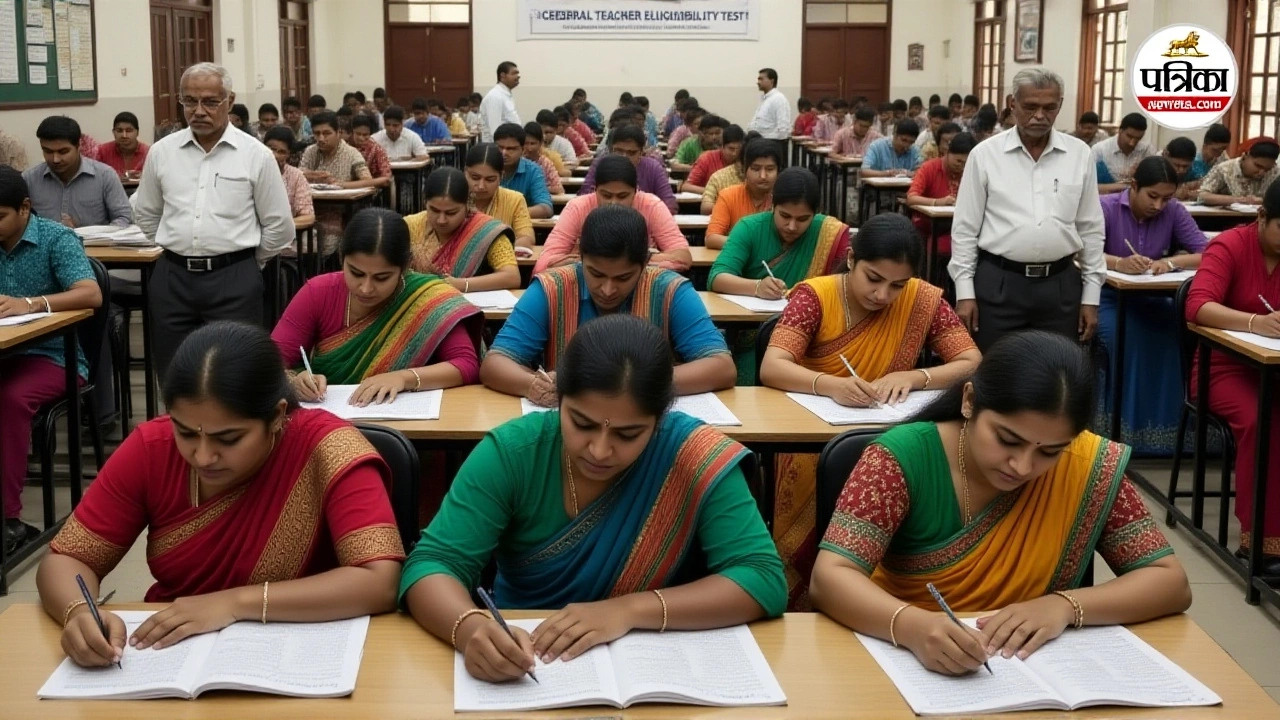
The test is split into two papers, both conducted on the same day in offline, pen-and-paper mode using OMR sheets. Paper I is for those aiming to teach Classes I to V. Paper II targets candidates who want to teach Classes VI to VIII. You can take both if you’re qualified for both levels. Each paper has 150 multiple-choice questions, covering child development, pedagogy, language proficiency, mathematics, and environmental studies.Here’s the twist: you don’t need a B.Ed. to sit for the exam anymore. The eligibility criteria vary by paper. For Paper I, a candidate needs either a senior secondary pass with 50% marks and a two-year diploma in elementary education—or a graduation degree with 45% marks and a one-year B.Ed. For Paper II, a graduation with at least 50% and a B.Ed. is mandatory. But here’s the kicker: there’s no upper age limit. A 52-year-old grandmother with a teaching dream can apply. So can a 19-year-old fresh out of college.
Application Process: Step-by-Step
The process is straightforward—but unforgiving if you miss a detail. Here’s what you must do:- Visit https://ctet.nic.in on November 27, 2025
- Click "Apply Online" for the December 2025 session
- Register with your mobile number and email
- Log in and fill out the form: personal details, educational qualifications, exam center preference
- Upload a passport-size photo (20–50 KB) and signature (10–20 KB) in JPG/JPEG format
- Pay the application fee: ₹1,000 for general category, ₹500 for SC/ST/PwD candidates
- Download and print the confirmation page—this is your proof of submission
Payment? Only online: debit/credit card, net banking, or UPI. No cash. No demand draft. And remember—the fee deadline is the same as the application deadline: December 18, 2025. Miss it, and you’re out.
What to Expect After the Exam
Results are typically declared within 45 days. For the December 2024 session, they came out on March 25, 2025. Qualified candidates receive a digital certificate uploaded to DigiLocker, eliminating the need for physical copies. The certificate is valid for seven years—long enough to land a job, or reapply if you don’t get one immediately.Historical patterns suggest the exam center allotment will be based on your top three city preferences. Last year, over 80% of applicants got one of their top choices. But with 132 cities and 1.5 million applicants, don’t expect to be assigned to your hometown unless it’s among the most popular.
Why the Timeline Feels Tight
Notice something odd? The notification drops on November 27, 2025. Registration closes on December 18. The exam is in February 2026. That’s just 45 days to prepare after the syllabus drops. Compare that to the December 2024 cycle, where the notification came in September and the exam was in December—giving candidates nearly three months.Why the rush? CBSE officials have hinted at aligning the CTET schedule with the academic calendar for central schools, which start new sessions in April. They want hiring completed by March, so new teachers can be trained before the next term. It’s efficient—but brutal for those with jobs or family commitments.
What’s Next?
The Ministry of Education is already preparing for the 2026-27 cycle. Rumors suggest a pilot for computer-based testing in 10 metro cities next year. But for now, it’s all paper and pencil. Keep checking ctet.nic.in daily after November 27. The Information Bulletin for February 2026 is already live on the site, and the syllabus hasn’t changed since 2023.One final note: If you’re applying for the first time, don’t rely on coaching centers. The official CTET sample papers on the website are your best friend. And if you’ve failed before? You’re not alone. Nearly 40% of first-time applicants don’t clear it. But 70% of those who reappear pass on their second try.
Frequently Asked Questions
Can I appear for both Paper I and Paper II in the same exam session?
Yes, candidates who meet the eligibility criteria for both papers can opt to take both on February 8, 2026. The exam is structured so Paper I runs from 9:30 a.m. to 11:00 a.m., followed by Paper II from 12:30 p.m. to 2:00 p.m., with a 90-minute break. You’ll need to pay the combined fee of ₹1,500 (general) or ₹750 (SC/ST/PwD).
Is the CTET certificate valid for state government teaching jobs?
While the CTET is mandatory for central schools, many states like Uttar Pradesh, Rajasthan, and Madhya Pradesh now accept it as a qualifying credential for state-level teaching posts. However, some states require their own TETs (like UPTET or HTET). Always check your state’s notification before applying.
What happens if I don’t clear the CTET December 2025?
You can reappear in the next cycle, which will likely be in July 2026. There’s no limit on attempts. Many candidates improve their scores by 20-30% on their second try. The key is analyzing your performance in the first attempt—especially in pedagogy and child development sections, which are often underestimated.
Can I change my exam center after submitting the application?
No. Once the application is submitted, exam center preferences are locked. CBSE assigns centers based on availability and proximity to your chosen preferences. If you need to relocate due to an emergency, you must contact CBSE’s helpline immediately after the admit card is released—but there’s no guarantee of a change.
Is the CTET syllabus different for Paper I and Paper II?
Yes. Paper I focuses on child development, teaching methods for early grades, and basic language and math. Paper II adds subject-specific pedagogy for Classes VI-VIII—like science and social science teaching strategies. The content depth increases, but the structure remains identical: 150 MCQs, 150 minutes, no negative marking.
Where can I find the official sample papers and syllabus?
The official CTET website, ctet.nic.in, hosts downloadable PDFs of previous years’ question papers and the detailed syllabus under the "Information Bulletin" section. Coaching materials are helpful, but only the official documents reflect the exact pattern and weightage used by CBSE.

Write a comment